
Planting
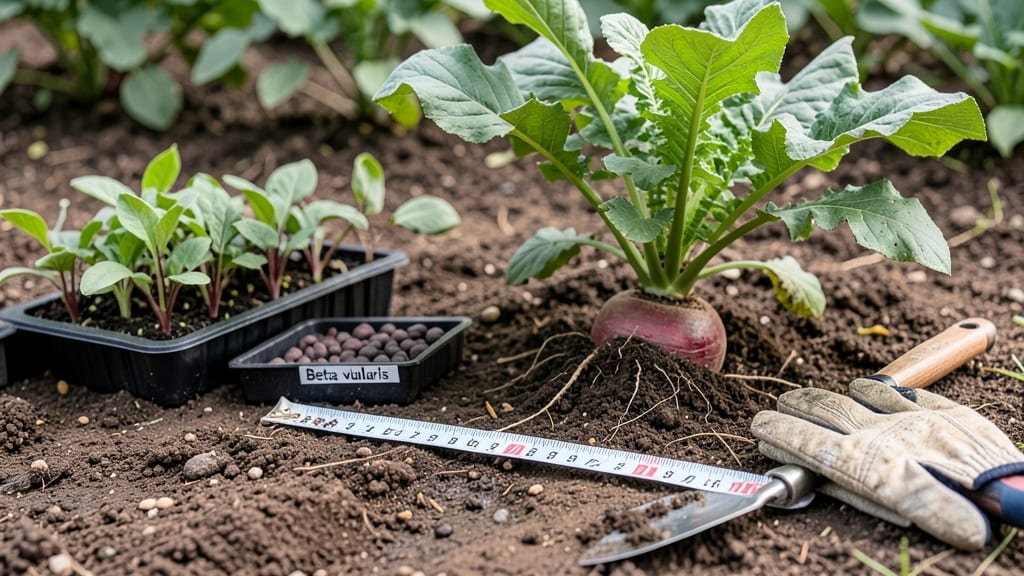
Beet seed spacing determines whether you harvest plump, tender roots or shriveling, misshapen ones. ✨ I learned the hard way—my first attempt had seeds packed too close, leaving me with tiny, tough beets and a tangled mess to thin.
The right spacing gives roots room to grow into those perfect, glossy globes we all crave, without wasting garden space.
Start with rows spaced 12–18 inches apart to allow airflow and easy access for weeding. Within each row, thin seedlings to 3–4 inches apart once they sprout—this might sound counterintuitive, but it’s what transforms a crowded row into a thriving patch.
The key is patience: beets need consistent moisture, so keep soil damp but not soggy until they reach harvest size.
When done right, you’ll end up with smooth, vibrant beets that pull cleanly from the soil, their tops lush and green. No more struggling to extract undersized roots or dealing with forking—just consistent, restaurant-quality harvests.
The secret? Spacing isn’t just about distance; it’s about giving each plant the room to shine.
For larger gardens, consider using a seed tape or a simple grid system to maintain even spacing—it saves time and ensures uniformity. And if you’re growing for storage, wider spacing (up to 6 inches) lets roots mature larger.
Whether you’re a backyard gardener or scaling up, precision planting pays off in every harvest.
📚 In This Guide
- What you need
- Instructions
- Tips and common mistakes
- Wrapping up and next steps
What you need
- ● Beet seeds: Choose certified organic or high-quality seeds (e.g., Detroit Dark Red, Golden Beets). Quantity: ~1–2 lbs per 100 ft row (adjust based on variety).
- ● Garden soil: Well-draining, loose soil with a pH of 6.0–7.0. Amend with compost if needed.
- ○ Planting markers or sticks: Wooden or biodegradable markers to label rows (optional but helpful for beginners).
- ● Garden trowel or transplanting knife: For digging precise holes (3–4" deep).
- ● Ruler or measuring tape: To ensure 1–2" spacing between seeds (or 3–4" for larger varieties).
- ● Hoe or garden rake: For loosening soil and creating furrows.
- ● Watering can or hose with a gentle spray nozzle: To keep seeds moist without disturbing them.
- ○ Garden twine (optional): For marking rows if you’re planting in a large plot.
- ● Weather check: Plant seeds when soil temps are 50–55°F (10–13°C) (spring or early fall).
- ● Sunlight: Ensure your garden spot gets full sun (6+ hours/day).
- ● Preparation: Till or loosen soil 12–18" deep before planting.
Precision planting guide: how to space beet seeds for optimal growth
Perfect spacing makes all the difference—crowded beets fight for nutrients, while over-spaced ones waste garden space.
🌱 Step 1: Prepare the Soil for Even Germination
Loosen the soil to a depth of 6 inches using a garden fork or tiller to break up compaction. Beets thrive in loose, well-draining soil that encourages root expansion. Work in a 2-3 inch layer of compost to enrich the bed and improve moisture retention—this prevents the soil from drying out too quickly between waterings.
Smooth the surface with a rake until it’s level, then create shallow furrows ½ inch deep using the back of your rake or a hoe. These furrows will guide your seed placement and ensure consistent depth. I like to space my rows 12-18 inches apart, giving me room to walk between them later for thinning and harvesting without disturbing the plants.
🌱 Step 2: Sow Seeds at the Correct Depth and Spacing
Scatter beet seeds thinly along the furrow, spacing them 1-2 inches apart. Beets germinate best when sown shallowly—cover them with just ¼ inch of soil or a light dusting of fine compost. Press gently to ensure good seed-to-soil contact, but don’t compact the soil too firmly, or you’ll smother the seeds.
Here’s the thing—beet seeds are tiny and often contain multiple seedlets in one pod. To avoid overcrowding, I tap the seed packet gently to release one seed at a time. If you’re sowing in rows, space the seeds 1 inch apart for bushier harvests, or stretch to 2 inches apart if you prefer larger individual beets. Mark the rows with small sticks or labels to track spacing as they grow.
💧 Step 3: Water Gently and Maintain Moisture
Water the furrows immediately after sowing to settle the soil and activate germination. Use a fine mist or watering can to avoid displacing the seeds. Keep the soil consistently moist but never soggy—beet seeds need 60-70°F soil temperatures and uniform moisture to sprout evenly. I check daily by pressing a finger into the soil; it should feel damp 1 inch below the surface.
Once seedlings emerge (usually in 7-14 days), thin them to the desired spacing. You’ll see the first true leaves appear—these are your cues. Use small scissors or your fingers to snip or pinch out weaker seedlings at the soil line, leaving the strongest ones 2-3 inches apart for bushy growth or 4-6 inches apart for larger beets.
☀️ Step 4: Thin and Monitor for Bushy Growth
After thinning, water again to help the remaining seedlings recover. Beets need full sun to partial shade, so position your rows to receive at least 4-6 hours of direct sunlight daily. If your garden gets intense afternoon sun, provide afternoon shade to prevent bolting—beets bolt when stressed by heat or drought.
Watch for signs of crowding as the plants mature. If leaves start touching between plants, it’s time to thin again. Bushy beets develop when they have enough space to spread their foliage—this means more energy for root development and sweeter harvests. Mulch around the plants with 1-2 inches of straw or grass clippings to retain moisture and suppress weeds, which compete for nutrients.
✂️ Step 5: Harvest at Peak Maturity for Best Flavor
Beets are ready to harvest when the roots reach 1-2 inches in diameter and the tops are 6-8 inches tall. Smaller beets are sweeter and more tender, while larger ones store longer. Use a garden fork to loosen the soil around the beet, then grasp the greens and pull gently—this prevents damage to the root.
Leave 1 inch of stem attached to the root to prevent bleeding, which can make the beets bitter. After harvest, thin the remaining plants again if needed to maintain spacing. Proper spacing ensures each beet gets the nutrients it needs, resulting in a bountiful, flavorful harvest without the struggle of overcrowding.
Tips & tricks for perfect beet seed spacing
A few strategic adjustments can transform your beet harvest from scrappy to spectacular. Here's how to avoid the most common spacing pitfalls.
Soil Preparation Secret: Don't just loosen the soil—break up any remaining clumps larger than a pea. I use my fingers to crumble them while working in the 2-3 inch compost layer. This creates tiny air pockets that help roots establish faster. The goal is soil that feels like crumbly cake batter, not sandy or compacted.
Seed Spacing Precision: When marking your rows, use a simple ruler trick: place a ruler along the furrow and make small pencil marks every 12-18 inches for row spacing. For individual seeds, use toothpicks as spacers—place one next to each seed, then cover with soil. This visual guide prevents the common mistake of uneven spacing that leads to patchy growth.
Thinning Technique: The 7-14 day germination window is your first thinning opportunity. Wait until you see true leaves (not just the first tiny sprouts) before thinning to 2-3 inches apart. Use clean scissors to cut seedlings at soil level—this prevents disturbing roots of neighboring plants. I always thin on a cloudy day to reduce stress on remaining seedlings.
Sunlight Strategy: For the 4-6 hours of daily sunlight requirement, position your rows with the longest dimension running east-west. This ensures all plants get equal exposure, especially important if your garden has afternoon shade. I've found that beets in the northern hemisphere benefit from morning sun and afternoon shade during hot summers.
Pro Tips for Beet Seed Spacing
- A few strategic adjustments can transform your beet harvest from scrappy to spectacular. Here's how to avoid the most...
- Soil Preparation Secret: Don't just loosen the soil—break up any remaining clumps larger than a pea. I use my fingers...
- Seed Spacing Precision: When marking your rows, use a simple ruler trick: place a ruler along the furrow and make sma...
Frequently asked questions
Got questions about beet seed spacing?
You’re not alone! Here are answers to the most common concerns—so you can plant with confidence and avoid overcrowded greens or stunted roots.
How close can I plant beet seeds without overcrowding?
For bush beets, space seeds 1–2 inches apart in rows 12–18 inches apart. For long, cylindrical varieties (like Detroit Dark Red), stretch spacing to 3–4 inches between seeds in rows 16–24 inches apart. Thinning later ensures roots have room to swell!
When is the best time to thin beets after germination?
Thin seedlings to the correct spacing once they’ve developed 2–3 true leaves (about 3–4 weeks after planting). Use sharp scissors or your fingers to snip at soil level—don’t pull, or you’ll disturb roots. Aim for 1 strong plant every 3–4 inches for optimal growth.
Can I use beet seed spacing for other root vegetables like carrots or radishes?
Not exactly! Beets need more space than carrots (thin to 2 inches apart) or radishes (thin to 1 inch apart). Each root veg has unique spacing needs—check seed packets for specifics. Overcrowding leads to forked roots or bitter greens, so plan accordingly!
What if my beets get too crowded after thinning?
If you missed thinning, don’t panic! Gently loosen soil around crowded plants to encourage lateral root growth. For baby beets, harvest smaller roots early (they’re sweeter!). If roots are already bolting or stunted, consider mulching heavily to retain moisture and reduce stress.
Does beet seed spacing change for container gardening?
Yes! In containers, space seeds 2–3 inches apart (closer than in-ground) and use large pots (12+ inches wide) for 1–2 plants. Choose compact varieties like ‘Babybeat’ or ‘Golden’ to maximize yield. Ensure pots have drainage holes—beets hate soggy roots!
Wrapping up and next steps
Mastering beet seed spacing is your secret weapon for thriving, crowd-free harvests! 🌱 Whether you're a seasoned gardener or just starting, the right spacing ensures robust roots and lush greens—no more competition for nutrients.
Now that you’ve got the know-how, it’s time to roll up your sleeves and plant with confidence.
Ready to take the next step? Start small—try a single row with perfect spacing, then expand as you gain confidence. Happy planting, and may your garden be as vibrant as a sunset! 🌅